
Search engine optimisation (SEO) is defined as the practice of improving a website’s content, structure, and technical foundation to increase its visibility in organic search results. Moz, Search Engine Land, and Yoast describe it as the process of ranking higher in unpaid search results by making your site easier for search engines to find, understand, and recommend. For business owners and marketing professionals, SEO is one of the most cost-effective ways to reach customers who are already searching for what you offer. Tools like Google Search Console, Moz, and Yoast give you the data and controls to act on that opportunity directly.
What is SEO and what does it actually cover?
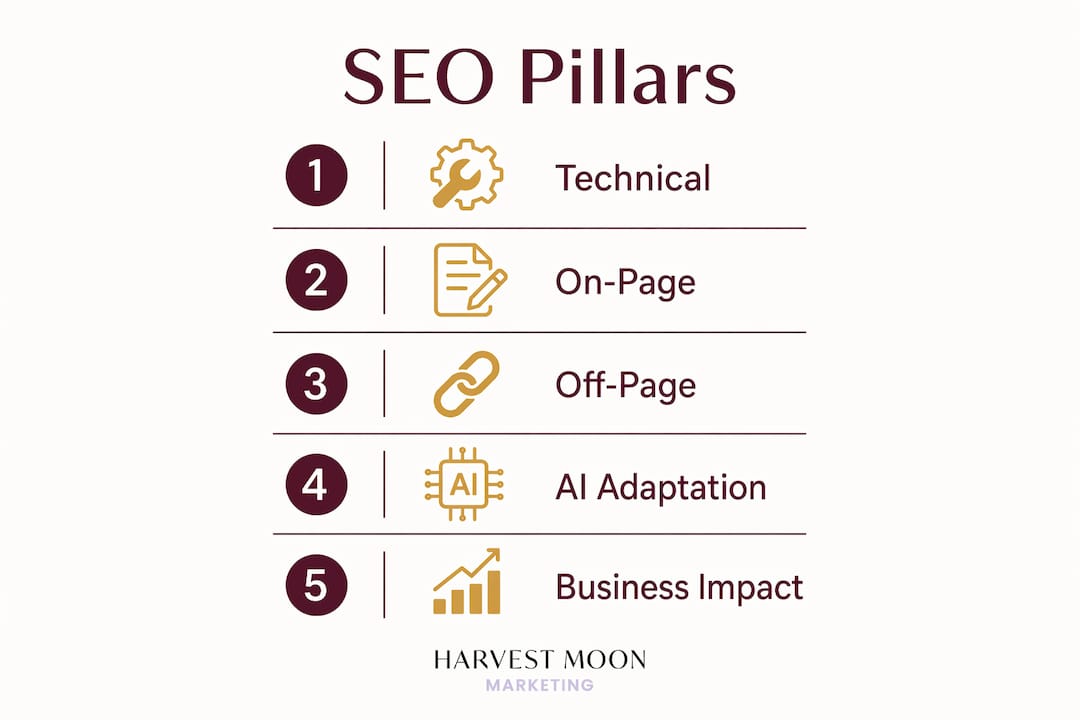
SEO encompasses three main pillars: technical SEO, on-page SEO, and off-page SEO. Each pillar addresses a different dimension of how search engines discover, evaluate, and rank your site. Neglecting any one of them limits the effectiveness of the other two.

Technical SEO
Technical SEO covers everything that affects how search engines crawl and index your site. Site speed, mobile-friendliness, crawlability, and proper use of robots.txt and meta tags all fall under this category. A fast, well-structured site signals to Google that your content is worth surfacing. Even excellent content will fail if technical barriers prevent search engines from reading it.
On-page SEO
On-page SEO focuses on the content itself: keyword targeting, heading structure, internal linking, and user experience. SEO blends technical performance with content that satisfies search intent and builds site authority. This means writing for real people first, then confirming that the page structure supports how search engines interpret the topic.
Off-page SEO
Off-page SEO refers to signals outside your website that indicate authority and trustworthiness. Backlinks from reputable sites, brand mentions, and third-party reviews all contribute. Businesses should earn authority over time through backlinks and mentions, aligning content with natural search language to build ranking steadily.
| Pillar | Primary focus | Key activities |
|---|---|---|
| Technical SEO | Crawlability and site health | Site speed, mobile optimisation, indexing controls |
| On-page SEO | Content relevance and user experience | Keywords, headings, internal links, page structure |
| Off-page SEO | Authority and trust signals | Backlinks, brand mentions, reviews |
Pro Tip: No single pillar carries the full load. A site with great content but poor technical health, or strong backlinks but thin pages, will plateau. Treat all three as one system.
How does SEO adapt to AI-driven search?
Modern SEO now extends well beyond traditional blue-link rankings. Google Search Central highlights that SEO today involves preparing content for AI assistants and summaries, not just classic search results. Google’s AI Overview, ChatGPT search, and Perplexity all pull from indexed web content, which means your SEO strategy directly affects whether your business appears in those answers.
The shift changes what “ranking” means for your business. AI-powered search experiences lead to higher quality site visits and more engaged audiences, placing the emphasis on content satisfaction rather than raw click volume. A page that thoroughly answers a specific question is more likely to be cited by an AI assistant than a page stuffed with keywords.
To perform well across both traditional and AI-driven search, your content strategy needs to address a few specific requirements:
- Crawlability: Search engines and AI crawlers must be able to access your pages. Blocked pages cannot be cited or ranked.
- Unique, specific content: Google recommends unique, helpful content that genuinely fulfils users’ needs, rather than generic summaries that duplicate what already exists.
- Structured data: Schema markup helps AI systems understand the context of your content, improving eligibility for rich results and AI summaries.
- Multimedia support: Images, videos, and supporting visuals increase the depth and citability of a page.
- Clear question-and-answer structure: Pages that directly answer specific questions perform better in AI-generated responses.
Pro Tip: Write every page as if you are answering one specific question from a real customer. That framing naturally produces the kind of content AI systems and search engines favour.
How does SEO drive real business results?
SEO is a critical marketing channel that drives sustainable, high-intent organic traffic leading to measurable business outcomes. Unlike paid advertising, which stops generating traffic the moment your budget runs out, organic search traffic compounds over time. A well-optimised page published today can generate leads for years without additional spend.
For local service businesses in particular, SEO connects you with customers at the exact moment they are searching for your category. A plumber in Calgary, a law firm in Edmonton, or a landscaping company in Vancouver all benefit from appearing in local search results when someone types “near me” or names their city. The DLegal Law Office case study is a direct example of how consistent SEO effort translates into brand recognition and inbound leads for a local service business.
SEO also supports your other marketing channels. Content built for search can feed email marketing campaigns that keep existing customers engaged, and strong organic visibility reinforces the credibility of your paid ads. Here are the practical steps to start building SEO traction:
- Audit your technical foundation. Use Google Search Console to identify crawl errors, indexing issues, and site speed problems that may be suppressing your rankings.
- Map your content to search intent. Identify the specific questions your customers type into Google and build pages that answer them directly.
- Build internal links. Connect related pages on your site so search engines understand your content structure and users can navigate naturally.
- Earn backlinks. Get listed in industry directories, contribute to local publications, and ask satisfied clients for testimonials on third-party sites.
- Track your metrics. Monitor organic traffic, keyword rankings, and conversion rates using digital marketing metrics to measure what is working.
Common SEO misconceptions business owners should drop
The most persistent myth in SEO is that it is simply about keywords. SEO requires matching content to the searcher’s intent and providing a good user experience, not repeating a phrase as many times as possible. Keyword stuffing actively harms rankings and makes your content unreadable.
A second common mistake is treating SEO as a one-time project. Common SEO pitfalls include ignoring crawlability, focusing only on keywords, and neglecting ongoing efforts to build authority. Search rankings shift constantly as competitors publish new content and Google updates its algorithms. SEO requires consistent attention, not a single sprint.
Here are practical ways to avoid the most common early mistakes:
- Use tools like Moz, Yoast, and Google Search Central to audit your site and learn what needs fixing.
- Write content in the language your customers actually use when searching, not the internal jargon your team uses.
- Check your robots.txt and noindex settings to confirm you are not accidentally blocking pages you want ranked.
- Build content around topics, not just individual keywords. A topic cluster approach produces more authority than isolated pages.
- Set a monthly review cadence. Even 30 minutes a month reviewing Search Console data keeps you ahead of issues before they compound.
Why SEO is a long game worth playing
After working with service businesses across Canada, the pattern I see most often is this: business owners either expect SEO to work like a paid ad (fast, immediate, and measurable within days) or they dismiss it entirely because they tried it once and saw nothing happen. Both reactions miss the point.
SEO is a compounding asset. The businesses I have seen benefit most from it are the ones that treated it as infrastructure, not a campaign. They built technically sound websites, published content that answered real customer questions, and earned authority through consistent effort over 12 to 18 months. The results they got were not just traffic. They were inbound leads from people who already trusted them before picking up the phone.
The AI shift makes this even more pronounced. As Google’s AI Overview and tools like Perplexity become the first stop for research, businesses with well-structured, authoritative content will appear in those answers. Businesses that skipped SEO will not. That gap will widen, not narrow, over the next few years.
My honest advice: do not wait until your competitors have locked up the top positions in your category. Start with a technical audit, build one strong content page per month, and track your progress. SEO rewards patience and consistency more than any other marketing channel I have worked with.
— Harvest
Ready to improve your search visibility?
If you are a business owner or marketing professional looking to turn SEO from a concept into a working lead generation channel, Harvestmoonmktg builds and manages SEO strategies tailored to local and service-based businesses across Canada. From technical audits to content planning and authority building, the team handles the full scope so you can focus on running your business. Harvestmoonmktg also offers social media engagement and email marketing services to complement your organic search efforts and keep your brand visible across every channel your customers use.
FAQ
What does SEO stand for?
SEO stands for search engine optimisation. It refers to the process of improving a website’s content, structure, and technical setup to increase its visibility in organic (unpaid) search results.
How long does SEO take to show results?
SEO typically takes three to six months to produce measurable results, and 12 to 18 months to reach full momentum. The timeline depends on your site’s current technical health, the competitiveness of your industry, and the consistency of your efforts.
What is the difference between on-page and off-page SEO?
On-page SEO covers everything within your website, including content, keywords, and page structure. Off-page SEO refers to external signals like backlinks and brand mentions that indicate your site’s authority to search engines.
Does SEO still matter with AI search tools?
SEO matters more than ever with AI search. AI-powered search experiences pull from indexed web content, so well-optimised, authoritative pages are more likely to appear in AI-generated answers and summaries.
Can a small business do SEO without a big budget?
Yes. Starting with Google Search Console, fixing technical issues, and publishing content that answers specific customer questions costs little beyond time. Tools like Moz and Yoast offer free tiers that cover the basics for most small businesses.


