
Local search engine optimisation (local SEO) is the process of improving your business’s visibility in location-based search results to attract nearby customers. Unlike broad SEO, local SEO targets people searching for services in a specific area, such as “plumber in Kelowna” or “dentist near me.” Google evaluates three core signals to rank local results: relevance, proximity, and prominence. Getting these right means your business appears where it counts most, in Google’s Local Pack, Maps, and local organic results, right when a nearby customer is ready to act.
How local SEO works: the three ranking signals
Google ranks local businesses using three signals: relevance, proximity, and prominence. Relevance measures how well your business matches a search query. Proximity measures how close your business is to the searcher. Prominence measures how well-known and trusted your business is across the web.

These signals work together. A business two kilometres away with strong reviews and a complete Google Business Profile (GBP) will often outrank a business one kilometre away with a sparse listing. Google Business Profile serves as the primary entity anchor for local SEO. It is the first place Google looks to confirm your business name, address, phone number, category, and service area.
The core components that feed these three signals are:
- Google Business Profile: Your GBP listing is the foundation. Complete every field, including services, hours, photos, and description.
- NAP consistency: Your business name, address, and phone number must match exactly across every directory, website, and citation. NAP consistency is critical for Google to confidently identify your business as a single, trustworthy entity.
- Reviews: Review velocity, freshness, and positive sentiment boost local prominence. More recent, positive reviews signal active credibility.
- Local backlinks: Links from local news sites, chambers of commerce, and community organisations validate prominence in Google’s eyes.
- Category selection: Choosing the correct primary GBP category is non-negotiable. Incorrect category selection restricts the range of queries your business can compete for.
- Physical proximity: Google factors in how close your location is to the searcher, though a strong profile can partially offset distance.
Pro Tip: Add secondary GBP categories to expand the range of searches your listing appears for, without diluting your primary category signal.
How do AI and entity clustering influence local SEO in 2026?
Google no longer ranks local businesses purely on keywords and directory listings. AI-powered search now evaluates your entire digital footprint and clusters related data points to determine whether your business is a credible, well-defined entity.
Entity clustering means Google cross-references your GBP, website, social profiles, citations, and review signals to build a picture of what your business is, where it operates, and who it serves. Inconsistent data across these sources creates confusion. Confusion lowers confidence. Lower confidence means lower rankings.
The practical implication is significant. A business that has its name spelled differently across Yelp, Yellow Pages, and its own website sends conflicting signals. Google cannot confidently identify it, so it ranks it lower. Consistent business name and category are foundational because Google does not rank what it cannot confidently identify.
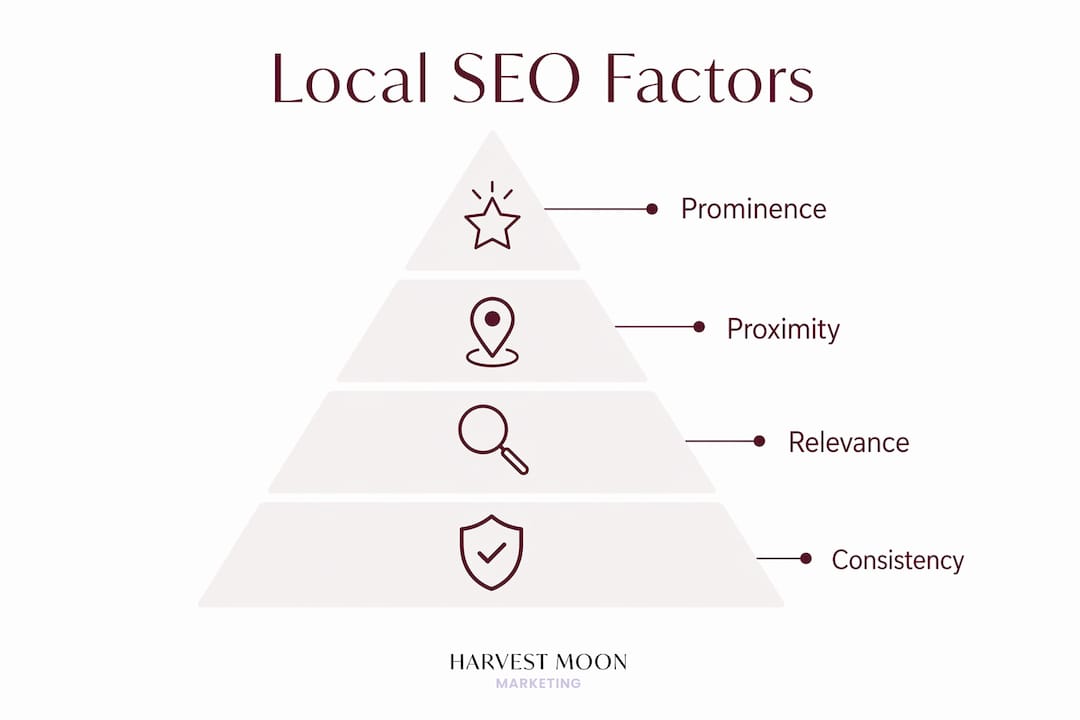
Structuring your data for AI-friendly local SEO means using schema markup on your website, keeping your GBP fully updated, and ensuring every platform where your business appears tells the same story. Businesses that align their entire digital footprint with user intent consistently outperform those that focus on keywords alone.
Pro Tip: Use Google’s own Knowledge Panel for your business as a quick audit. If the information shown is incomplete or wrong, that is exactly what Google is using to rank you.
How does local SEO differ from traditional SEO?
Traditional SEO and local SEO share the same foundation but serve different goals. Traditional SEO targets broad, national, or global audiences through keyword rankings and large-scale backlink building. Local SEO targets a geographic area and relies heavily on GBP, proximity signals, and community-level authority.
| Factor | Local SEO | Traditional SEO |
|---|---|---|
| Primary goal | Attract nearby customers | Attract broad online audience |
| Key ranking tool | Google Business Profile | Website authority and backlinks |
| Search results | Local Pack, Maps, local organic | National organic results |
| Review signals | High importance | Low to moderate importance |
| Geographic targeting | Specific city or region | National or global |
| Content focus | Local service areas, community | Broad topics and keywords |
The most important distinction for local business owners is this: local SEO drives phone calls and foot traffic. Traditional SEO drives website visits. A plumber in Calgary does not need to rank nationally. They need to appear when someone in their neighbourhood searches for help right now.
Local SEO also relies on a free GBP and SEO report to identify gaps in your current local presence. Understanding where you stand before investing in improvements saves both time and money.
For a plain-language breakdown of how SEO basics connect to local strategy, that resource is worth reviewing before you start making changes.
What practical steps improve your local SEO?
Local SEO rewards consistency and completeness. These steps apply directly to Canadian local business owners looking to improve their rankings and attract more nearby customers.
-
Complete your Google Business Profile fully. Add your business name, address, phone number, website, hours, services, and a detailed description. Businesses with high-quality photos on their GBP receive 42% more requests for driving directions. Upload photos regularly, not just once.
-
Audit your NAP consistency. Check your business name, address, and phone number on Google, Yelp, Yellow Pages, Facebook, and your own website. Every variation is a trust signal working against you.
-
Ask for reviews and respond to them. Send a follow-up message to satisfied customers with a direct link to your GBP review page. Respond to every review, positive or negative. Engagement signals activity and credibility.
-
Build local backlinks. Reach out to your local chamber of commerce, business associations, and community news sites. A single link from a trusted local source carries more weight than dozens of generic directory listings.
-
Create localised website content. Write service area pages that name the specific cities and neighbourhoods you serve. Include local landmarks, common customer questions, and location-specific details. Generic content does not signal local relevance.
-
Monitor and update your categories. Review your GBP primary and secondary categories every few months. Google updates its category options, and the right category directly affects which queries you appear for.
-
Track your local SEO performance. Use Google Search Console and Google Business Profile Insights to monitor which queries drive impressions and clicks. Adjust your content and categories based on what you see.
Pro Tip: The top 3 results in Google’s Local Pack capture 44% of clicks for local-intent searches. Ranking in that top 3 is the single highest-impact goal in local SEO.
For a deeper look at the specific factors that determine where you rank, the local SEO ranking factors guide from Harvestmoonmktg covers the 2026 landscape in detail.
How Harvestmoonmktg helps local businesses get found
Local SEO is one of the most cost-effective ways for a local business to generate consistent leads. Harvestmoonmktg works with local businesses across Canada to build and manage the full local SEO picture, from Google Business Profile optimisation and citation building to localised content and review strategy. For businesses that want faster results alongside their SEO, Google Ads delivers direct lead generation while your organic rankings build. Whether you are starting from scratch or fixing gaps in an existing presence, Harvestmoonmktg offers lead packages built for local service businesses ready to grow.
FAQ
What is local SEO and how does it differ from regular SEO?
Local SEO is the practice of improving your business’s visibility in location-based search results to attract nearby customers. Regular SEO targets broad audiences nationally or globally, while local SEO focuses on geographic relevance, Google Business Profile, and proximity signals.
How long does local SEO take to show results?
Local SEO typically produces noticeable improvements within three to six months, depending on your starting point and competition. Completing your Google Business Profile and fixing NAP inconsistencies often produces faster gains than other tactics.
Why does NAP consistency matter for local SEO?
Google uses your business name, address, and phone number across multiple sources to confirm your business identity. Inconsistent NAP data creates conflicting signals that lower Google’s confidence in your listing, which reduces your ranking.
What is the Google Local Pack?
The Google Local Pack is the block of three business listings that appears at the top of local search results, often with a map. The top 3 results in the Local Pack capture 44% of all clicks for local-intent searches, making it the most valuable position in local SEO.
Does my business need a website to rank locally?
A website is not strictly required to appear in the Local Pack, but it significantly strengthens your ranking. A localised website with service area pages, schema markup, and consistent NAP information reinforces your Google Business Profile and expands the queries you can rank for.


