
A marketing audit is a systematic evaluation of all your marketing activities, channels, and strategy to identify what is working, what is wasting budget, and where your best opportunities lie. For small to mid-sized business owners, this process is the difference between spending on instinct and spending on evidence. 87% of marketers using structured, audit-backed planning report higher effectiveness than those relying on assumptions. That gap is significant. Harvest Moon Marketing works with business owners who want to close it.
What does a marketing audit include?
A marketing audit covers every layer of your marketing function. A thorough audit examines strategy, KPIs, channels, messaging, technology, team capacity, and competitive position. The goal is to answer two questions: where is revenue coming from, and where is budget disappearing without return?
Most audits fall into two categories:
- Full marketing audit: A comprehensive review of every channel and function, typically conducted annually. This is the deep dive that surfaces structural problems and long-term opportunities.
- Targeted assessment: A focused review of one or two channels or functions, such as SEO performance or email engagement. Useful for quick diagnostics between full audits.
Experts recommend partial audits every 90 days and a comprehensive audit at least once per year. The quarterly check-ins catch short-term drift; the annual review realigns everything with your business goals.
A standard marketing audit checklist covers these areas:
| Audit area | What it examines |
|---|---|
| Strategy | Goals, positioning, and alignment with business objectives |
| KPIs and metrics | Which numbers you track and whether they reflect real performance |
| Channels | SEO, email, paid search, social media, and content |
| Messaging | Brand voice, consistency, and audience relevance |
| Technology | Tools, integrations, and tracking infrastructure |
| Competitive position | How you compare to others in your market |

Pro Tip: Before you start any audit, write down the three business questions you most need answered. This keeps the process focused and prevents scope creep.
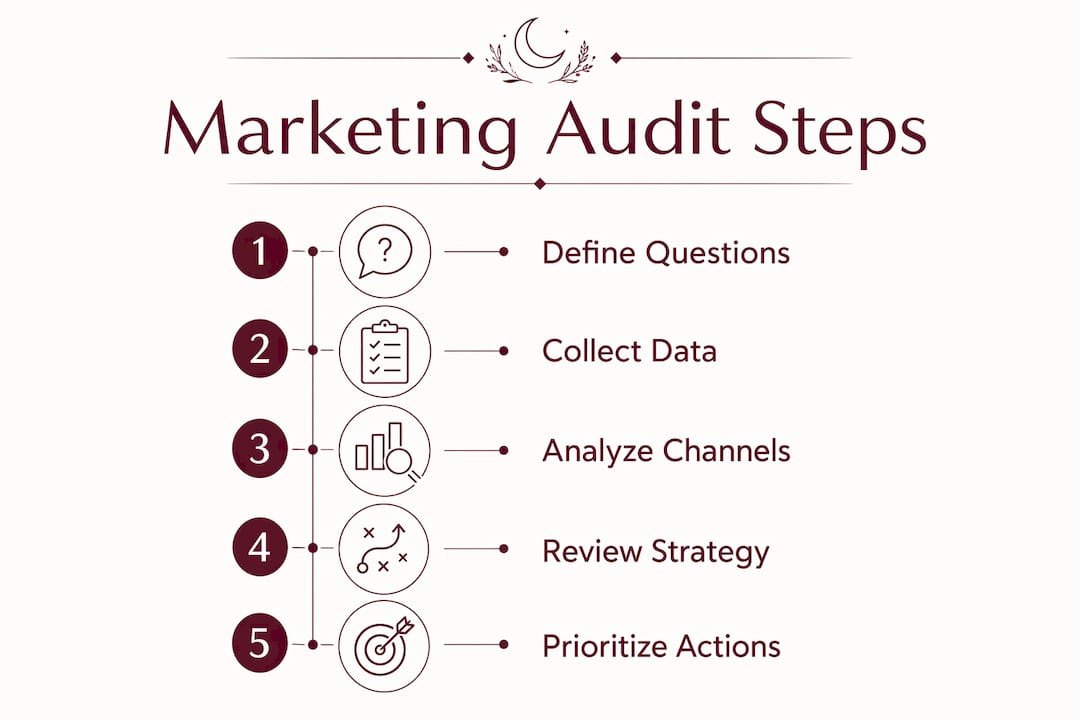
How to perform a marketing audit effectively
Performing a marketing audit well requires a clear process. Skipping steps or rushing the data-gathering phase produces findings you cannot trust.
-
Define your goals. Decide what the audit needs to answer. Are you trying to reduce wasted spend, improve lead quality, or understand why a channel has gone flat? A clear goal shapes every step that follows.
-
Audit your tracking infrastructure first. Before pulling any data, verify that your analytics, conversion tracking, and attribution are working correctly. Broken tracking pixels and expired tags make audit findings unreliable. Fix data integrity issues before you analyse anything.
-
Gather performance data by channel. Pull at least 12 months of data for each active channel. Look at traffic, leads, conversion rates, and cost per acquisition. Cross-reference your campaign performance metrics against your stated KPIs.
-
Analyse and identify gaps. Compare actual performance against your benchmarks. Note where results fall short and where they exceed expectations. Both matter. Underperforming channels need a decision: fix or cut. Overperforming channels deserve more attention and budget.
-
Build a prioritised recommendations report. A true marketing audit is prescriptive, not just descriptive. It tells you what to do next, not just what happened. Rank every recommendation by impact versus effort, then limit your immediate action list to three to five items.
-
Present findings to leadership. Audit results are most useful when they reach decision-makers. A clear report with documented evidence supports budget conversations and strategic planning.
Pro Tip: Resist the urge to act on every finding at once. Implementing all recommendations simultaneously causes team burnout and dilutes results. Pick your top five and execute them well.
What are the benefits of a marketing audit?
The benefits of a marketing audit go well beyond a tidy report. They show up in your budget, your team’s focus, and your leadership’s confidence.
“Audit-backed marketing decisions give leadership the documented evidence they need to defend spend, plan confidently, and hold marketing accountable to real business outcomes. Regular audits improve confidence for CFOs and boards by grounding decisions in data rather than intuition.”
The most consistent benefits business owners report include:
- Budget recovery. Audits regularly uncover hidden waste such as overlapping software subscriptions, forgotten ad campaigns, and channels that consume budget without producing leads. Many audits pay for themselves within the first cycle.
- Clearer ROI. When you know which channels drive revenue, you can shift budget toward them. Learning to track digital marketing ROI accurately becomes far easier once an audit has cleaned up your data.
- Better decisions at the top. Governance benefits are real. Leadership teams that receive audit-backed reports make faster, more confident decisions about marketing investment.
- Alignment between marketing and business goals. Audits expose the gap between what marketing is doing and what the business actually needs. Closing that gap is where the real performance gains come from.
Consider this: only 44% of marketing teams analyse campaign performance weekly. The rest are working from data that is weeks or months old. A structured audit forces the kind of rigorous review that most businesses skip entirely.
What challenges will you face during a marketing audit?
A marketing audit surfaces problems. That is the point. But the process itself comes with obstacles that catch many business owners off guard.
Data blindness is the most common issue. If your Google Analytics 4 setup has gaps, your ad conversion tracking is misconfigured, or your CRM is not connected to your website, your data tells an incomplete story. Technical health checks of your tracking systems are not optional. They are the foundation of a valid audit.
Common challenges and how to address them:
- Incomplete tracking: Audit your analytics setup before pulling any performance data. Fix broken tags and verify that key conversion events are firing correctly.
- Resource limitations: Small teams often lack the bandwidth for a full audit. Scope the audit to match your capacity. A focused channel audit is better than a rushed full review.
- Scope creep: Audits can expand endlessly. Define the boundaries before you start and stick to them.
- Resistance to findings: Audit results sometimes reveal that a channel the team loves is not performing. Present findings with data, not opinion, to keep the conversation productive.
Recurring audits solve the biggest challenge of all: the tendency to let performance drift unnoticed. Quarterly partial reviews keep your key marketing metrics current and prevent small problems from becoming expensive ones.
Pro Tip: If your internal team lacks the time or technical skills for a full audit, an external consultant or agency brings objectivity and catches blind spots your team may have normalised.
How Harvest Moon Marketing can support your audit and next steps
A marketing audit is only as valuable as the actions that follow it. Harvest Moon Marketing works with small to mid-sized business owners to turn audit findings into real performance improvements. Whether your audit reveals gaps in your local SEO performance, weak lead generation from paid search, or email that is not staying top of mind with existing customers, the team at Harvest Moon Marketing builds plans grounded in your actual data. If you want expert support conducting an audit or acting on what it reveals, Harvest Moon Marketing offers the full range of digital marketing services to move your business forward.
FAQ
What is a marketing audit in simple terms?
A marketing audit is a structured review of all your marketing activities to identify what is working, what is not, and where to focus next. It covers strategy, channels, KPIs, messaging, and technology.
How often should a business perform a marketing audit?
Experts recommend partial audits every 90 days and a full comprehensive audit at least once per year to maintain strategic alignment and catch performance issues early.
What does a marketing audit include?
A marketing audit includes a review of your strategy, KPIs, active channels such as SEO and email, brand messaging, marketing technology, and your competitive position in the market.
How long does a marketing audit take?
The timeline depends on scope. A targeted channel audit can take a few days. A full marketing audit for a small to mid-sized business typically takes two to four weeks when done thoroughly.
What is the most common mistake in a marketing audit?
The most common mistake is trying to act on every finding at once. Prioritising three to five high-impact recommendations and executing them well produces better results than spreading effort across every issue simultaneously.


