
Inbound marketing is defined as a strategy that attracts customers by offering them useful content and building trust, rather than interrupting them with ads. Unlike paid search or cold outreach, inbound pulls prospects toward your business at the exact moment they are looking for answers. 61% of marketers believe marketing is undergoing its biggest disruption in 20 years, driven by AI-powered search and generative content tools. That disruption makes understanding inbound marketing explained in full, including its structure, components, and modern execution, more urgent than ever for small business owners and marketers.
What is inbound marketing and how does it differ from outbound?
Inbound marketing is a complete system, not just a content calendar. It combines SEO, email nurture, conversion architecture, and measurement into a coordinated approach that compounds value over time. Content marketing is one tool within inbound, not a synonym for it.
The clearest way to understand inbound is to contrast it with outbound. Outbound marketing pushes messages at people who have not asked for them. Think cold calls, display ads, and unsolicited email blasts. Inbound pulls people in by answering questions they are already asking. The result is a lower cost per lead over time, because inbound content keeps working long after you publish it. Paid ads stop generating leads the moment your budget runs out. Inbound assets do not.

| Dimension | Inbound marketing | Content marketing | Outbound marketing |
|---|---|---|---|
| Core mechanism | Pull: attract and nurture | Educate and build authority | Push: interrupt and broadcast |
| Primary channels | SEO, email, lead capture | Blog, video, podcast | PPC, cold email, print |
| Lead quality | High intent | Medium intent | Low intent |
| Cost over time | Decreasing | Decreasing | Fixed or increasing |
| Relationship focus | Long-term | Medium-term | Transactional |
Inbound reduces acquisition cost compared to paid advertising because its content compounds value over time. That compounding effect is the core financial argument for building an inbound programme.
What are the key components of an inbound marketing strategy?
A working inbound strategy has six defined components. Omit any one of them and leads will leak from your pipeline before they ever reach sales.
The six components are:
- Audience definition: Build buyer personas using firmographics and psychographic pain points. Update these every six months to stay aligned with how your market is actually behaving.
- Content strategy: Map content to search intent types, not just keyword volume. Prioritise conversion intent over high-traffic, low-conversion keywords.
- Conversion architecture: Every piece of content needs a clear next step. A blog post without a lead capture mechanism is just publishing, not marketing.
- Distribution: Organic search is one channel. Email, community platforms, and partnerships each extend your reach to audiences who will never find you through Google alone.
- Nurture sequences: B2B buyers complete 60–70% of their research before contacting sales. Your nurture sequence must capture and guide them during that independent research phase.
- Measurement framework: Track revenue-driven metrics like MQL-to-SQL conversion rate and lead-to-close velocity. Session counts tell you nothing about business impact.
Pro Tip: Most small businesses treat inbound as a content calendar. That is the single most common reason inbound fails. A content calendar without conversion architecture, nurture sequences, and measurement is a publishing schedule, not a marketing strategy.
How has AI reshaped inbound marketing in 2026?
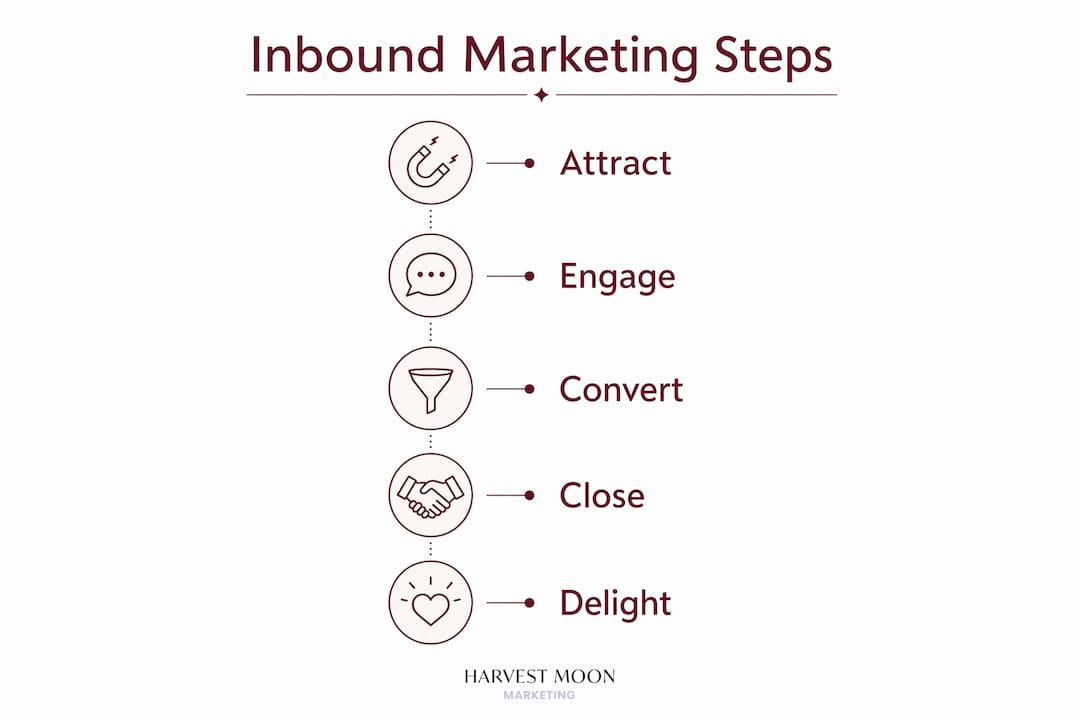
AI has changed both how inbound content is created and how prospects discover it. AI and GTM engineering now automate lead scoring, nurture sequences, and the handoff between marketing and sales. GTM engineering refers to the practice of using integrated marketing technology workflows to automate the entire pipeline from lead attraction through to deal closure. The result is shorter qualification times and better conversion outcomes.
The discovery side has shifted just as much. Prospects increasingly find answers through AI-powered tools like ChatGPT and Perplexity rather than through traditional search. Optimising content for AI-discoverable formats, including structured FAQs, authoritative expert profiles, and schema-marked content, is now a core inbound requirement. Relying solely on organic Google rankings is no longer sufficient.
| Tactic | Traditional inbound | AI-driven inbound |
|---|---|---|
| Lead scoring | Manual or rule-based | Automated, behavioural, predictive |
| Content creation | Human-only, high volume | AI-assisted, original insights prioritised |
| Prospect discovery | Google search | Google + AI tools + community platforms |
| Nurture sequences | Scheduled email drips | Dynamic, behaviour-triggered automation |
| Pipeline visibility | Siloed by channel | Unified across marketing and sales |
The risk with AI-assisted content is volume without substance. Publishing more content faster does not build authority. Original research, specific examples, and genuine expertise are what AI-powered discovery tools surface and cite. Marketing automation and AI can accelerate lead generation, but the underlying content still needs to be worth reading.
Pro Tip: Use AI to handle distribution, formatting, and sequence automation. Write the core insights yourself. AI tools reward original thinking, not paraphrased content.
How to implement inbound marketing for small businesses
The most effective way to start is a 90-day pilot. A 90-day inbound launch plan prioritises content engines and lead capture systems within the first four to eight weeks. That timeline is short enough to show results before stakeholders lose patience, and long enough to generate real data.
Follow this sequence:
- Define your audience. Build one or two buyer personas with specific pain points, job titles, and research behaviours. Do not skip this step. Every content and distribution decision flows from it.
- Build your content engine. Publish content that targets conversion intent first. A prospect searching “email marketing for accountants” is closer to buying than one searching “what is email marketing.” Prioritise the former.
- Set up lead capture. Every content asset needs a mechanism to capture contact information. A guide, a checklist, or a free consultation offer all work. Converting website visitors to leads is the bridge between traffic and pipeline.
- Combine quick wins with long-term assets. High-performing inbound teams allocate budget to both community channels like Reddit and long-term SEO content. Reddit can drive traffic within days. SEO builds for months.
- Measure what matters. Track MQL-to-SQL conversion rate and lead-to-close velocity from day one. Revenue-driven metrics are what let you present inbound as a revenue engine to your CFO or business partner, not just a marketing expense.
- Update and repeat. Refresh buyer personas and top-performing content every six months. Markets shift, and content that ranked well last year may no longer match how your prospects are searching.
Framing inbound as a revenue engine, not a content project, is what earns executive support. Stakeholders who see inbound as blogging will underfund it. Stakeholders who see it as a system that reduces customer acquisition cost will invest in it. Tracking digital marketing ROI from the start gives you the numbers to make that case.
How Harvestmoonmktg helps small businesses build inbound systems that convert
Harvestmoonmktg is a full-suite digital marketing agency that builds inbound programmes for small businesses and service-based companies across Canada. The team specialises in connecting content strategy to lead generation, so your marketing produces measurable pipeline, not just traffic. For businesses already generating leads, email marketing is one of the most effective ways to nurture those contacts and stay top of mind until they are ready to buy. If you want to talk through what an inbound strategy would look like for your specific business, book a call with the Harvestmoonmktg team and get a clear picture of where to start.
FAQ
What is inbound marketing in simple terms?
Inbound marketing is a strategy that attracts customers by publishing useful content and building trust, rather than interrupting people with ads. It uses SEO, email, and lead capture to bring prospects to you at the moment they are searching for answers.
How is inbound marketing different from content marketing?
Content marketing is one tactic within inbound marketing. Inbound marketing is the full system, including audience definition, conversion architecture, nurture sequences, and measurement, that turns content into a revenue-generating pipeline.
How long does inbound marketing take to show results?
A structured 90-day pilot focused on content engines and lead capture can demonstrate measurable ROI within the first four to eight weeks. Long-term compounding results from SEO typically build over six to twelve months.
What metrics should I track for inbound marketing?
Track MQL-to-SQL conversion rate and lead-to-close velocity as your primary indicators. Session counts and page views are secondary. Revenue-driven metrics are what let you prove inbound is working to stakeholders and business partners.
Does inbound marketing work for small businesses?
Inbound marketing works particularly well for small businesses because it reduces customer acquisition cost over time and builds lasting assets. The key is treating it as a structured system rather than an occasional publishing effort.


