
Email newsletter publishing is a direct-to-audience content business where you own the list, control the message, and generate revenue without relying on third-party algorithms. Email marketing delivers $36 to $40 for every $1 spent when content is well-targeted. That return is why entrepreneurs and content creators are building newsletter businesses as a primary revenue channel, not just a side project. The barrier to entry has never been lower. Modern platforms require zero technical skills and no upfront cost, which means your first issue can go out this week.
How to launch an email newsletter business: what you need first
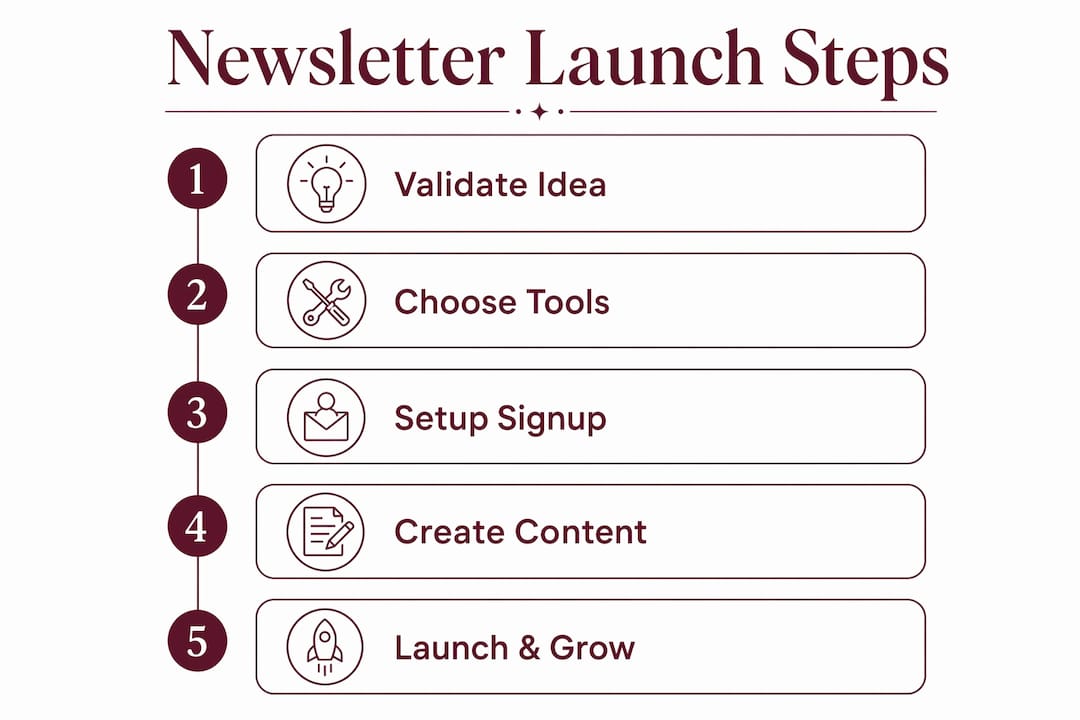
The good news is that no website or coding skills are required to get started. Modern newsletter platforms provide free hosted signup pages, so you can start collecting subscribers immediately. Your first decision is not which platform to use. It is what niche you will serve and whether real people want it.

Validate your idea before you write a single word of content. Share a simple signup link with 10 to 20 people in your network and see who subscribes. If you cannot get five people excited about your concept, the niche needs refining. This step saves weeks of wasted effort.
Choosing the right tools for your newsletter
Different platform tiers serve different stages of growth. Here is a practical breakdown of what to look for when evaluating your options:
| Feature category | What to look for |
|---|---|
| Signup and hosting | Free hosted signup page, no domain required |
| Sending capacity | Free tier with at least 500–1,000 subscribers |
| Automation | Welcome email sequence on signup |
| Analytics | Open rate, click rate, and unsubscribe tracking |
| Monetisation | Paid subscription or sponsor placement support |
Entry-level platforms cover the first three rows for free. Enterprise platforms add advanced segmentation, A/B testing, and CRM integrations. Start with a free tier and upgrade only when your list outgrows it.
Pro Tip: Set up your welcome email before you launch your signup page. Every new subscriber should receive a message within minutes confirming what they signed up for and what to expect.
How do you create engaging email content that keeps subscribers reading?
Creating engaging email content starts with one clear goal per issue. Trying to cover three topics in one newsletter trains readers to skim. Pick one idea, go deep, and leave them wanting more.
Subject lines are the single biggest lever on open rates. Subject lines under 50 characters perform better on mobile, and preview text should stay under 90 characters. Think of the subject line as a headline and the preview text as a subheadline. Both must earn the open before the reader ever sees your content.
Writing body copy that converts
Personalisation goes far beyond inserting a first name. Personalised emails generate six times more transactions than generic ones. That means writing as if you know your reader’s specific problem, not just their name. Reference the situation your subscriber is in, the outcome they want, and the obstacle standing in their way.
Keep paragraphs to two or three sentences. Long blocks of text lose readers on mobile, where most newsletters are opened. Every paragraph should move the reader one step closer to your call to action.
Common content mistakes to avoid:
- Writing for yourself instead of your subscriber’s problem
- Burying the main point below the fold
- Using vague calls to action like “click here” instead of “download the checklist”
- Sending without testing on mobile and desktop first
- Inconsistent tone that makes each issue feel like a different writer
Pro Tip: Consistency beats frequency. A weekly or biweekly schedule you can maintain for a year outperforms a daily schedule you abandon in month two. Pick a cadence you can sustain, then protect it.
What are the best strategies to grow your subscriber base from scratch?
List building is a long game, but the early tactics are straightforward. Your first 100 subscribers almost always come from personal outreach. Send a direct message to people in your network, tell them exactly what your newsletter covers, and ask them to sign up. This is not spam. It is a personal invitation, and it works.
After personal outreach, passive growth tools take over. Here is a proven sequence for building your list organically:
- Add your signup link to every social media bio and email signature.
- Create a lead magnet, such as a checklist, template, or short guide, to increase signup conversion. Lead magnets dramatically increase signup rates compared to a plain “subscribe for updates” ask.
- Write SEO-friendly blog posts on topics your audience searches for, and link each post to your signup form.
- Cross-promote with other newsletter creators in adjacent niches through shoutout swaps.
- Monitor your unsubscribe rate after each issue. A spike tells you something in that issue missed the mark.
The performance marketing principles that drive paid campaigns apply to organic list growth too. Targeting, messaging clarity, and conversion tracking all matter, even when you are not spending money on ads.
Pro Tip: Track your click-to-open rate, not just your open rate. A high open rate with a low click rate means your subject line is strong but your body copy is not delivering. Fix the copy, not the subject line.
How do you monetise a newsletter business sustainably?
Monetisation works best when it feels like a natural extension of your content, not an interruption. The most common revenue models for newsletter businesses are:
- Affiliate marketing: Recommend products you genuinely use and earn a commission on sales. Affiliate marketing is the easiest entry point for new newsletters because it requires no product creation.
- Sponsorships: Brands pay to place a message in your newsletter. This works once you have a defined audience and consistent open rates to show sponsors.
- Paid subscriptions: Readers pay a monthly or annual fee for premium content. This model requires a strong free tier to demonstrate value first.
- Digital products: Sell guides, templates, courses, or toolkits directly to your list. Your newsletter is the marketing channel and the sales channel at once.
- Services: Use your newsletter to position yourself as an expert and convert readers into consulting or freelance clients.
The biggest monetisation mistake is rushing it. Introducing revenue too early, before subscribers trust you, accelerates unsubscribes. Spend your first three months proving that your content is worth reading. Revenue follows trust, not the other way around.
A common pitfall is over-relying on a single revenue stream. Sponsorships dry up when advertisers cut budgets. Diversifying across two or three models protects your income and keeps your content independent. For a deeper look at how email fits into a full email marketing strategy, the fundamentals of audience trust and consistent value apply across every monetisation model.
How Harvest Moon Marketing supports newsletter-driven businesses
Email marketing keeps your brand in front of the people who already know you. Harvest Moon Marketing works with entrepreneurs and business owners to build email marketing campaigns that generate measurable results, from welcome sequences to re-engagement series. The team handles strategy, copywriting, and performance tracking so you can focus on your content. For businesses ready to pair their newsletter with direct lead generation, Harvest Moon Marketing’s lead packages bring new prospects into your funnel while your newsletter converts them into loyal customers. If you want your email programme to do more than stay top of mind, that is where a full-service team makes the difference.
FAQ
What does it cost to start an email newsletter business?
Starting costs can be zero. Most major newsletter platforms offer free tiers that cover hosting, signup pages, and sending to your first several hundred subscribers.
How long should my first newsletter issue be?
A first issue of 300–600 words is the recommended length. It is long enough to deliver real value and short enough to respect your reader’s time.
How often should I send my newsletter?
A weekly or biweekly schedule produces better engagement than sporadic or daily sending. Consistency matters more than volume.
When should I start monetising my newsletter?
Wait until your subscribers trust your content, typically after three months of consistent publishing. Introducing revenue too early increases unsubscribes before loyalty is established.
Do I need a website to launch a newsletter?
No. Free hosted signup pages from modern newsletter platforms let you collect subscribers without a website or any technical setup.


