
Referral marketing is defined as a structured approach to acquiring new clients through recommendations from existing ones. The American Marketing Association recognises it as one of the highest-trust acquisition channels available to service businesses. Yet most small and medium-sized businesses (SMBs) run referral programmes on spreadsheets, sticky notes, and memory. That gap is exactly why referrals need digital support: without technology to track, automate, and measure referral activity, even a strong word-of-mouth reputation produces inconsistent, unscalable results. Harvest Moon Marketing works with service-based businesses that are ready to close that gap.
Why referrals need digital support for tracking and ROI
Referral programmes generate far more value than most businesses realise, and manual tracking is the main reason that value stays hidden. Referred customers generate 31%–57% more referrals than non-referred ones, creating a compounding effect called referral contagion. Ignoring those secondary referrals means businesses undervalue their referral ROI by 20%–36%.
Digital tools fix this by capturing every layer of the referral chain. A CRM-integrated referral platform assigns unique tracking links to each advocate, so you can see not just who referred a client, but who that client referred next. That data turns a vague sense of “word of mouth is working” into a measurable growth channel you can track marketing ROI with confidence.

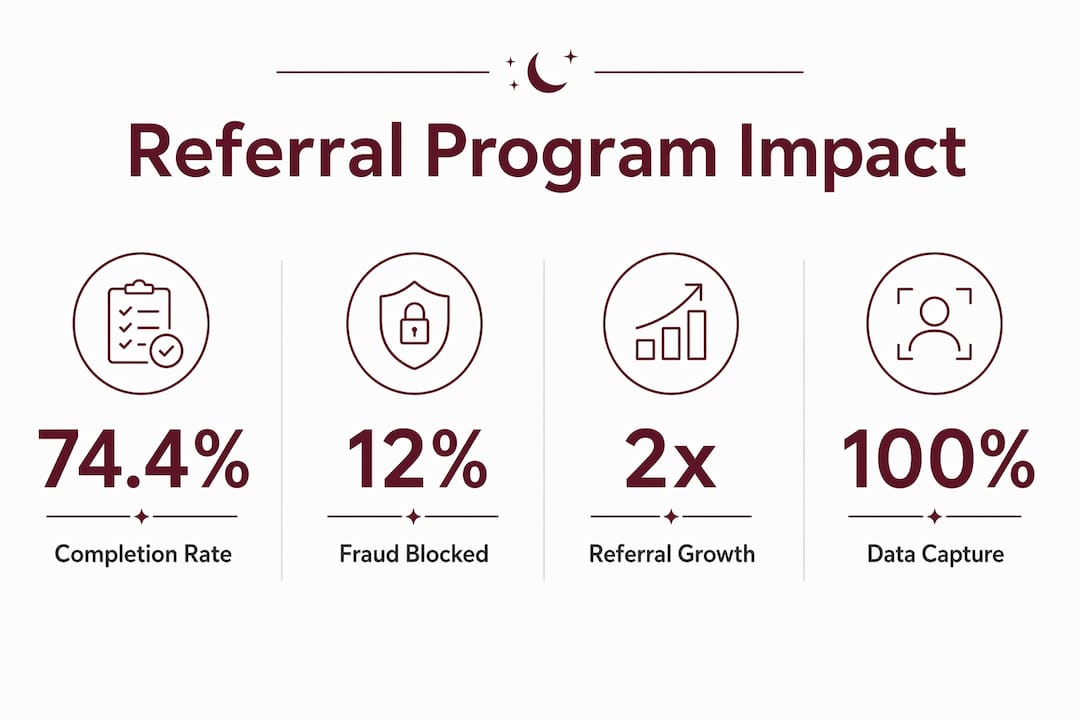
Businesses that connect referral systems with CRM and marketing platforms see up to 74.4% referral completion rates and a 38% uplift in average order value. That is not a marginal improvement. It is the difference between a referral programme that pays for itself and one that quietly drains time.
| Tracking method | Referral visibility | Error risk | Scalability |
|---|---|---|---|
| Manual (spreadsheet) | First generation only | High | Very low |
| Basic digital form | First generation only | Medium | Low |
| CRM-integrated platform | Multi-generation | Low | High |
| Full referral API | Multi-generation + fraud detection | Very low | Very high |
Pro Tip: Connect your referral platform to your CRM from day one. Retroactively importing referral data is time-consuming and often incomplete, which skews your ROI calculations.
What operational problems does digital support solve?
The primary reason referral programmes fail is not a lack of motivated advocates. Lack of operational structure is the real culprit. When the referral process depends on a team member remembering to ask, or a client knowing where to send someone, leads fall through the cracks constantly.
Digital solutions address this at every stage of the referral workflow:
- Automated referral triggers. The system sends a referral request at the right moment in the client journey, such as after a positive review or a completed project, without anyone on your team having to remember.
- Pre-loaded contact sharing. Embedding referral logic inside your client portal or onboarding flow means advocates can share with contacts in two clicks, rather than copying a link and composing a message from scratch.
- Sales and marketing synchronisation. When a referral lead enters the system, it routes automatically to the right salesperson with full context. No warm lead sits in an inbox unread.
- Fraud prevention. Automated platforms block up to 12% of invalid referral attempts before rewards are issued. Manual programmes have no practical way to catch this abuse, which erodes both budget and programme credibility.
Without digital infrastructure, businesses lose leads and cannot deliver a consistent experience to referred prospects. A referred lead who clicks a broken link or receives no follow-up does not become a client. They become a missed opportunity that also reflects poorly on the advocate who sent them.
Pro Tip: Embed your referral ask inside your existing client touchpoints, such as your invoice confirmation email or post-project survey, rather than building a separate referral campaign. Clients are most receptive immediately after a positive experience.
How does digital support improve customer engagement in referrals?
Higher engagement in referral programmes comes from reducing friction and matching the reward to the effort. High task complexity reduces referral participation, and nonmonetary rewards outperform cash incentives when the referral task feels demanding. Digital tools address both sides of that equation.
- Simplify the sharing process. Give advocates a pre-written message, a unique link, and one-click sharing across email, text, or social channels. Every additional step a client must complete reduces the likelihood they follow through.
- Match rewards to effort. An analysis of 541 referral programme posts confirms that aligning reward type with task complexity drives significantly better engagement. A complex B2B referral warrants a meaningful, non-cash reward such as a service credit or exclusive access. A simple consumer referral suits a straightforward discount.
- Use branded landing pages. When a referred prospect clicks a link, branded landing pages improve conversion by immediately communicating credibility. A generic form or a homepage drop-off kills trust before the conversation starts.
- Activate social proof digitally. Targeted messaging that shows prospects how many of their peers have already used your service triggers descriptive norm behaviour. People follow what people like them do. A digital system can personalise this message at scale in a way no manual process can.
The automated outreach process that supports these touchpoints is what separates a referral programme that converts from one that generates occasional, unpredictable leads.
How can SMB service businesses implement digital referral solutions?
Implementing digital referral support does not require a large technology budget. The right approach depends on your current systems and the volume of referrals you are managing.
Start by auditing your existing CRM. Platforms like HubSpot and Salesforce both support referral tracking through native features or third-party integrations. If you are not yet using a CRM, adopting one is the first step, because referral data without a central record system is nearly impossible to act on reliably.
Next, evaluate whether a referral API or a plug-and-play referral platform fits your scale. A referral API gives you full control over the programme logic and integrates deeply with your existing tools, but requires development resources. A platform solution is faster to deploy and suits most SMBs that are building their referral infrastructure for the first time.
Build referral asks into your existing client journey rather than treating them as a separate campaign. The most effective programmes embed the ask at natural high-satisfaction moments: after a project milestone, after a five-star review, or at the point of contract renewal. Treating referral strategy as a growth operating system rather than a one-off campaign reduces customer acquisition cost and builds compounding momentum over time.
Dual-sided incentives, where both the advocate and the new client receive a reward, consistently outperform single-sided ones. Digital platforms make these easy to manage because the system tracks who referred whom and issues rewards automatically upon verified conversion. The benefits of automated marketing extend directly into referral programme management, reducing manual workload while improving accuracy.
Finally, track the digital marketing metrics that reveal programme health: referral completion rate, time to conversion for referred leads, and secondary referral rate. These three numbers tell you whether your programme is working and where to improve it.
How Harvest Moon Marketing helps service businesses grow through digital referral strategy
Harvest Moon Marketing works with service-based SMBs that want their referral programmes to produce consistent, measurable results rather than occasional wins. A well-built referral programme needs the same digital foundation as any other growth channel: clear tracking, a strong online presence, and content that builds credibility before a referred prospect ever contacts you. Harvest Moon Marketing’s SEO services make sure your business ranks when referred prospects search your name or service category, turning a warm referral into a confirmed booking. The team also supports social media engagement that keeps your brand visible to existing clients, which is what prompts them to refer in the first place. Reach out to Harvest Moon Marketing to build the digital foundation your referral programme needs.
FAQ
Why do referral programmes fail without digital support?
Lack of operational structure is the primary reason referral programmes fail, not a lack of willing advocates. Digital tools automate the referral ask, track leads accurately, and prevent warm prospects from being lost.
How much does digital support improve referral completion rates?
Businesses integrating referral systems with CRM and marketing platforms see up to 74.4% referral completion rates. That compares favourably to manual programmes where completion rates are rarely tracked at all.
What is referral contagion and why does it matter?
Referral contagion is the effect where referred customers go on to refer others, multiplying programme ROI. Referred customers generate 31%–57% more referrals than non-referred clients, a chain reaction that only digital tracking can capture and credit accurately.
Should SMBs use a referral API or a referral platform?
A referral API suits businesses with development resources that need deep integration with existing tools. A plug-and-play referral platform is faster to deploy and the better starting point for most SMBs building their first structured referral programme.
How does fraud affect referral programmes without digital tools?
Automated platforms block up to 12% of invalid referral attempts before rewards are paid out. Manual programmes have no reliable mechanism to detect or prevent this abuse, which wastes budget and undermines programme trust.


