
Most business owners hear “lead magnet” and picture a freebie thrown at website visitors. That framing misses almost everything that matters. A lead magnet is a deliberate, strategic offer you exchange for contact information, and when done right, it becomes the first step in a relationship with a potential customer. Lead magnets operate like digital free samples to generate warm leads that can be nurtured over time. This guide breaks down exactly how they work, what types perform best, and how to build one that actually moves people toward buying.
What is a lead magnet, exactly?
The lead magnet definition is straightforward: it is a specific offer, piece of content, or incentive you provide in exchange for a prospect’s contact details, typically their email address. Think of it as a transaction. The visitor gets something genuinely useful. You get permission to follow up.
What separates a lead magnet from a random giveaway is intent. A good lead magnet is designed to attract a particular type of person, someone who has a problem you can solve. That specificity is what makes the resulting list valuable. Gated content requires users to submit info before access, and this approach allows you to segment and target your follow-up based on what you already know about what they wanted.
The benefits of lead magnets go beyond building a list. Lead magnets represent a win-win: customers get upfront value, and businesses gain permission to engage with warm leads who have already demonstrated interest. That permission is worth considerably more than a cold contact scraped from a directory.

It also helps to distinguish between the lead magnet itself and the form attached to it. The magnet is the offer. The form is the mechanism for collecting information. Conflating the two is one of the most common mistakes marketers make, and it leads to poor decisions about both.
Research shows 50% of marketers experience higher conversion rates when using lead magnets, which reflects how much easier it is to nurture someone who came to you willingly.
Types of lead magnets and when to use them
Lead magnets can include discount codes, webinars, white papers, ebooks, templates, and other resources tailored to audience needs and buying stages. The format you choose matters as much as the topic.
Here is a comparison of the most common types and where each fits best:
| Lead magnet type | Best for | Buying stage |
|---|---|---|
| Checklist or guide | Quick wins, practical problems | Early awareness |
| eBook or white paper | Educating on complex topics | Research phase |
| Free template | Audiences who want to act now | Mid-funnel |
| Webinar or workshop | Building trust, demonstrating expertise | Mid to late funnel |
| Discount or coupon | Price-sensitive buyers | Late funnel |
| Free trial or demo | Software or service businesses | Late funnel |
Relevance is everything. A checklist works beautifully for a contractor offering a “10-point home inspection prep guide” because it solves an immediate problem for someone actively thinking about selling. A detailed white paper on construction regulations would miss that same audience entirely.
Perceived value also plays a significant role. A lead magnet with a specific, tangible outcome feels worth trading an email address for. “Download our free guide” is weak. “Get the exact checklist we use before every estimate” is concrete and credible.
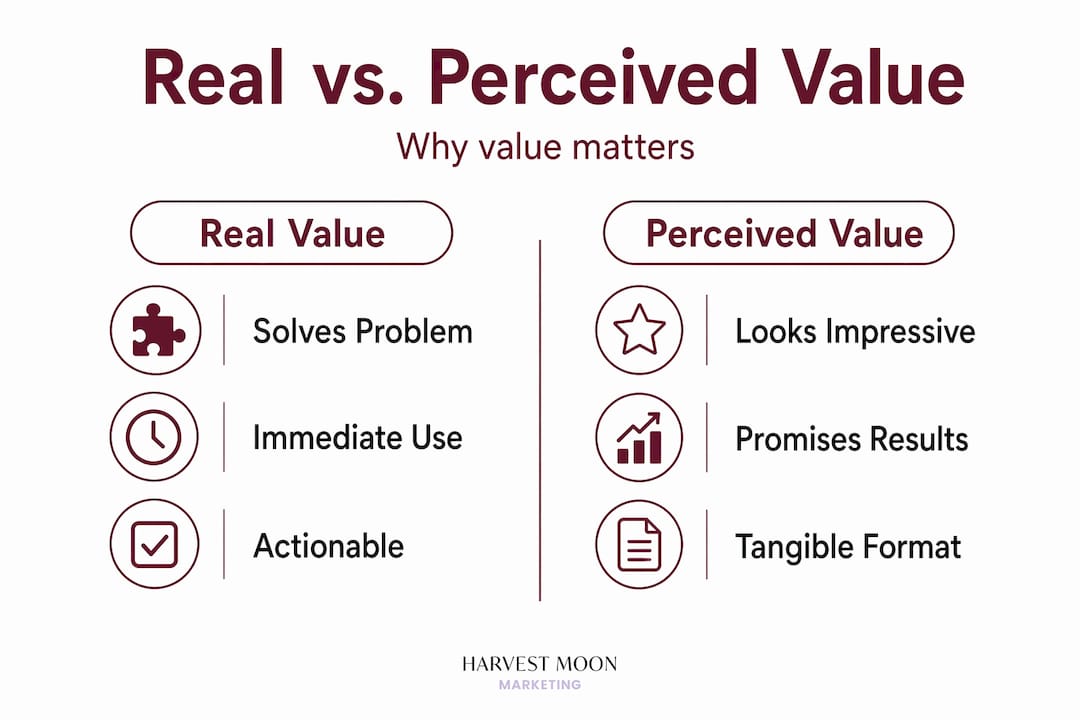
Pro Tip: Match your lead magnet format to how your audience prefers to consume information. If your prospects are busy tradespeople, a one-page checklist will outperform a 20-page eBook every single time.
How to create an effective lead magnet
Knowing how to create a lead magnet that converts comes down to four things: specificity, value, ease of consumption, and a clear path forward.
-
Choose a single, specific problem to solve. The tighter the focus, the better the conversion. “Grow your business” is too broad. “The three questions you must ask before signing a commercial lease” targets someone at a very specific moment.
-
Match the form to your qualification goals. The number of form fields required should match your marketing goals: more fields for higher-quality leads, fewer for broader volume. If you need to qualify leads by industry or company size before your sales team follows up, ask for it. If you are building awareness, just ask for an email.
-
Test your offer iteratively. Businesses run iterative experiments adjusting form requirements to target segments differently. Your first version will rarely be your best. Run A/B tests on the offer description, the form length, and the landing page copy.
-
Design the follow-up before you launch. A lead magnet without a nurturing sequence is a dead end. Map out what happens in the 7 to 14 days after someone downloads your offer before you ever put it live.
Common mistakes include making the offer too generic, asking for too much information too soon, and delivering the content then going silent. The last one is the biggest waste. You have a warm, interested contact. Use it.
Pro Tip: If you are unsure whether to prioritise lead volume or lead quality, ask your sales team what they actually close. More leads mean nothing if they are the wrong fit.
Integrating lead magnets into your marketing funnel
A lead magnet is not the finish line. It is the starting gun. Lead magnets must be integrated into a lead nurturing lifecycle, because a single download without follow-up is rarely effective.
Here is what a functional post-capture sequence looks like:
- Immediate delivery email: Send the promised content within minutes, not hours. First impressions carry weight.
- Onboarding content: Follow up two to three days later with context that helps them use what they downloaded. If you sent a checklist, send a short explanation of the two items people most often overlook.
- Value-building emails: Over the next week or two, share relevant information that positions you as the obvious choice when they are ready to buy.
- Soft conversion offer: After the trust-building phase, make a clear, low-pressure offer tied directly to the problem your lead magnet addressed.
Marketing CRMs linked to gated content allow you to track engagement patterns and personalise follow-up based on what contacts open, click, and read. That data tells you who is warm and who needs more time, which makes your follow-up far more effective than generic bulk messaging.
The high-intent lead generation case study for Boundless Joy shows exactly how this plays out in practice: pairing the right lead magnet with a deliberate email sequence added over 1,000 qualified subscribers to their list.
My honest take on lead magnet strategy
I have reviewed hundreds of lead magnet set-ups across service businesses of every size. The pattern I keep seeing is this: businesses spend real time building a nice-looking offer, then treat it like a trophy once it is live. They count downloads and declare victory.
What actually moves the needle is the sequence after the download. In my experience, the lead magnet needs delivery, onboarding, and ongoing content to convert, not just a thank-you page. That is where most businesses leave significant revenue on the table.
I have also seen businesses overcomplicate the offer itself. They build a 40-page eBook covering every possible angle when a sharp two-page guide would have performed twice as well. Simplicity signals respect for the reader’s time.
What I have seen work consistently is this: one specific problem, one clear format, and a follow-up sequence that feels like it was written for that exact person. Aligning the lead magnet and form design with segmentation goals is the detail that separates a list-builder from an actual revenue asset. Do not skip it.
— Harvest
Ready to put your lead magnet to work?
Building a lead magnet is step one. Turning those contacts into paying customers requires a follow-up strategy that actually runs. At Harvestmoonmktg, we help service businesses design and deploy the full picture: from the initial offer through to email nurturing sequences that keep you top of mind, and Google Ads campaigns that send the right traffic to your lead magnet in the first place. If you want to stop collecting contacts and start converting them, explore our full marketing services to see what fits your business.
FAQ
What is the lead magnet definition in plain terms?
A lead magnet is a free offer, such as a guide, checklist, or discount, that a business provides in exchange for a prospect’s contact information, typically their email address.
How do lead magnets work?
A prospect sees your offer, fills out a form to access it, and receives the content. You receive their contact details and permission to follow up with relevant marketing messages.
What makes a good lead magnet?
A good lead magnet solves one specific problem for a clearly defined audience, delivers immediate value, and connects naturally to a follow-up sequence that moves the prospect toward becoming a customer.
What are the best lead magnet examples for service businesses?
Practical formats like checklists, short guides, free consultations, and templates tend to perform well for service businesses because they deliver tangible value tied directly to a problem the prospect already has.
How many form fields should a lead magnet have?
It depends on your goal. Fewer fields produce higher volume, while more fields filter for better-qualified leads. Match the form length to what your sales process actually needs.


